Open Dyslexia Fonts & Web Accessibility Trends for 2026

Sidharth Nayyar
Sidharth Nayyar
Ready to make your website accessible? Engage with our team or start a free trial today.
Tap to ask AI about this article
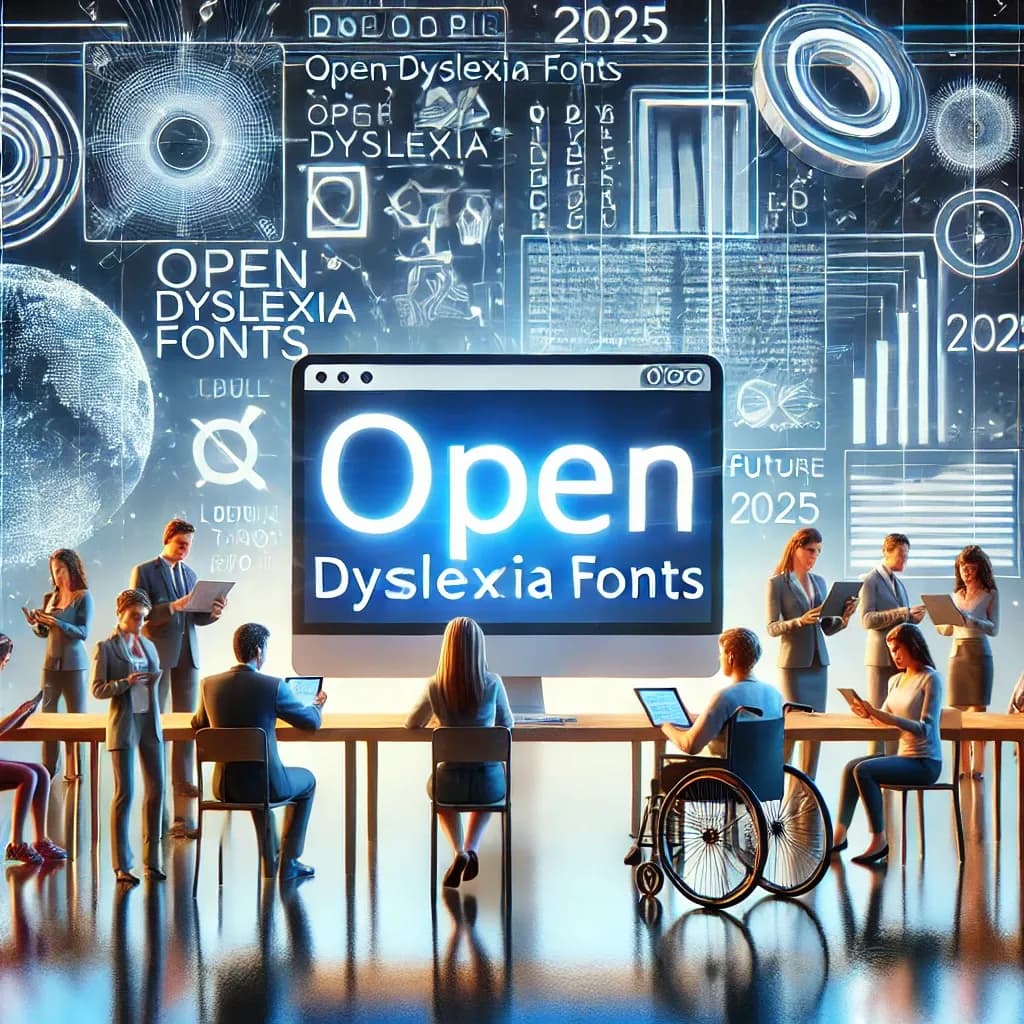
In the rapidly evolving world of web design and digital accessibility, the focus is steadily shifting toward inclusivity for all users, regardless of their abilities or challenges. As we approach 2025, one of the most significant developments in web accessibility is the increased adoption of open fonts designed specifically for dyslexic users. These fonts promise to revolutionize the online experience for millions, making web content more readable and easier to navigate for people with dyslexia.
But why should we care about this? And how can we ensure that the web becomes a more accessible space for everyone, including those with cognitive disabilities? In this blog, we'll explore the importance of open fonts for dyslexia, the key trends shaping this shift, and the legal standards that web developers and designers must follow to ensure compliance with accessibility rules.
Dyslexia is a learning disability that affects an individual’s ability to read, write, and spell, despite having normal intelligence. People with dyslexia often struggle with decoding written words, which can make reading a frustrating experience. However, it’s not just about reading difficulties—dyslexia can also impact memory, focus, and the ability to process language quickly.
As more people use the internet for education, work, and socializing, it becomes increasingly important to make web content accessible for those with dyslexia. Traditional fonts can pose significant challenges for these users, often creating barriers to understanding and engagement. This is where open dyslexia fonts come into play.
Open fonts for dyslexia are specially designed typefaces that are optimized for ease of reading by individuals with dyslexia. These fonts are typically characterized by features like:
In the past, dyslexia-friendly fonts were mostly proprietary or limited to specific software. However, the trend toward open-source fonts has been growing. Open fonts for dyslexia are now freely available, meaning that designers and developers can easily integrate them into websites without any licensing concerns. Examples of popular open fonts include OpenDyslexic and Dyslexie.
By making these fonts more widely available, designers are ensuring that dyslexic users can have a more comfortable and engaging browsing experience, just like any other user.
As we look to 2025, several key trends in web design and accessibility will further drive the adoption of dyslexia-friendly fonts and other inclusive features:
The Web Content Accessibility Guidelines (WCAG) are the gold standard for web accessibility, providing clear rules and recommendations for making websites accessible to people with disabilities. As the WCAG evolves, newer versions like WCAG 3.0 will provide even more specific guidelines around cognitive disabilities, including dyslexia. In particular, the guidelines will stress the importance of text legibility and readability, making the adoption of open dyslexia fonts a priority.
The guidelines will also emphasize the need for websites to provide multiple ways of presenting content, which could include options for dyslexia-friendly fonts, larger text sizes, and color contrast adjustments. By following these standards, web developers will ensure that their sites are accessible to a wider range of users, including those with learning disabilities.
Artificial Intelligence (AI) will play a major role in shaping the future of accessibility. By 2025, we can expect AI-driven tools that automatically detect when a website might be difficult for dyslexic users to read and suggest or apply dyslexia-friendly font choices. These tools could work on a per-user basis, ensuring that the site automatically adapts to an individual's preferences without needing manual adjustments.
For example, AI could analyze the text and suggest alternative fonts or even adjust layout elements like line spacing and contrast to suit users with dyslexia. This level of personalization will make accessibility feel more natural and less intrusive for users, fostering an environment where accessibility features are seamless and intuitive.
The concept of inclusive design—designing with the needs of the broadest possible audience in mind—will become more mainstream in the next few years. As the understanding of neurodiversity grows, designers will be expected to prioritize the needs of users with cognitive disabilities, including dyslexia.
In 2025, it's likely that more websites will offer built-in options for dyslexic users to toggle fonts, spacing, and other accessibility features based on their preferences. This "design for all" approach is a reflection of the ongoing push toward a more equitable digital world, where websites aren’t just usable, but enjoyable for everyone, regardless of their cognitive abilities.
As people interact with content across multiple devices—smartphones, tablets, laptops, smartwatches—the need for consistent accessibility features becomes even more crucial. By 2025, dyslexia-friendly fonts will be fully optimized for cross-platform use, ensuring that dyslexic users have the same experience no matter what device they're using.
This will require collaboration between font developers, web designers, and platform providers to ensure that open dyslexia fonts work seamlessly across all platforms and applications.
When it comes to accessibility, the legal landscape is evolving as well. Many countries have laws that require websites to be accessible to people with disabilities, including those with cognitive impairments like dyslexia. Below are some of the key standards and regulations that web developers should be aware of:
In the United States, the ADA mandates that public accommodations, including websites, must be accessible to people with disabilities. While the ADA doesn't provide specific technical guidelines for web accessibility, compliance with WCAG is widely recognized as a best practice for meeting these legal requirements. For dyslexic users, adopting features like dyslexia-friendly fonts can help ensure that your site is compliant with ADA standards.
In Europe, the European Accessibility Act (EAA) requires that digital services, including websites and apps, be accessible to people with disabilities. The EAA explicitly mentions the need for accessible digital content and provides a framework for ensuring equal access to information, which aligns closely with WCAG.
The Equality Act 2010 in the UK ensures that people with disabilities are not discriminated against, including in the digital realm. Websites and online services must provide reasonable adjustments for users with disabilities, which can include the implementation of dyslexia-friendly fonts and other accessible design practices.
As we look to 2025, the integration of open dyslexia fonts into web design will be an essential step toward creating a more inclusive, accessible internet. The focus on accessibility is shifting from being a "nice-to-have" feature to a fundamental part of web development that benefits all users, regardless of ability. Adopting dyslexia-friendly fonts is just one part of a broader movement toward inclusive design, where neurodiversity and cognitive disabilities are considered from the very start of the design process.
The trends we see today—such as the push for better cognitive accessibility, AI-driven personalization, and adherence to evolving guidelines like WCAG 3.0—are not just about compliance but about offering a better, more equitable digital experience. As AI tools evolve, website accessibility will become increasingly seamless and adaptive, ensuring that users with dyslexia and other cognitive impairments can easily navigate the web.
Web developers, designers, and content creators have a significant opportunity to foster inclusion, empower users with diverse needs, and enhance the user experience for everyone. By 2025, making websites more readable, usable, and enjoyable through features like dyslexia-friendly fonts will become a standard practice—one that helps ensure the internet is accessible for all.
---
An open dyslexia font is a typeface designed specifically for individuals with dyslexia to enhance readability and reduce visual confusion. These fonts often include wider letter spacing, distinctive shapes to avoid character confusion (like "b" vs "d"), and larger x-heights for better legibility. Open dyslexia fonts are freely available for anyone to use in web design and digital content creation.
Dyslexia-friendly fonts significantly improve readability for users with dyslexia, a cognitive condition that affects how words are perceived and decoded. By integrating dyslexia-friendly fonts, you make your content more accessible to a broader audience, ensuring that your website is usable by people with diverse cognitive needs, which enhances user experience and supports inclusivity.
Dyslexia-friendly fonts are designed with specific features to aid people with dyslexia. Key differences include:
These design elements make dyslexia-friendly fonts easier to read and navigate, improving user experience.
Yes! Open dyslexia fonts are typically free to use and open source, meaning you can download, use, and modify them as needed. Popular examples like OpenDyslexic and Dyslexie are free to incorporate into web designs and applications without the need for licensing fees.
Implementing dyslexia-friendly fonts on your website is simple:
By offering font customization, users can choose the typeface that works best for them.
The Web Content Accessibility Guidelines (WCAG) are a set of recommendations created by the World Wide Web Consortium (W3C) to ensure web content is accessible to people with disabilities. WCAG covers a range of accessibility aspects, including visual, auditory, physical, and cognitive impairments. Adopting WCAG-compliant design practices, such as using dyslexia-friendly fonts, helps make websites more accessible to a diverse audience.
Dyslexia-friendly fonts help meet legal accessibility standards by improving usability for individuals with cognitive disabilities, including dyslexia. In the U.S., adhering to ADA guidelines, and in Europe, following the European Accessibility Act (EAA), ensures that digital content is accessible to all users. Dyslexia-friendly fonts play a key role in helping websites comply with these regulations, as they make content easier to read for users with learning disabilities.
While dyslexia-friendly fonts do not directly impact search engine rankings, improving the user experience for people with disabilities can lead to lower bounce rates, higher engagement, and better retention. Websites that prioritize accessibility tend to offer a smoother, more intuitive experience, which may contribute to improved SEO indirectly.
While dyslexia-friendly fonts are designed to assist individuals with dyslexia, their benefits extend to many others, including those with:
Dyslexia-friendly fonts offer general readability benefits, making them useful for a wider audience.
Beyond dyslexia-friendly fonts, here are additional accessibility features you can implement:
Together, these features create a more inclusive environment for all users.
By 2025, it is highly likely that dyslexia-friendly fonts will become a standard practice in web design. As awareness of neurodiversity and cognitive accessibility grows, and with evolving regulations like WCAG 3.0 emphasizing cognitive accessibility, more websites will adopt features that support dyslexic users. With AI tools making accessibility even more customizable and seamless, dyslexia-friendly design will increasingly be integrated into websites by default.
AI can enhance web accessibility by automatically detecting content that may be difficult for dyslexic users to read and adjusting it accordingly. For example, AI can suggest dyslexia-friendly fonts, modify text spacing, or change color contrast in real-time based on the user's needs. Personalized accessibility adjustments can make the browsing experience more intuitive, adaptive, and user-friendly, ensuring dyslexic users have an optimal experience on any device.
By adopting dyslexia-friendly fonts and complying with accessibility standards, you are not just following legal guidelines—you're contributing to a more inclusive digital world. As we approach 2025, accessibility will continue to be a central focus, and every step you take toward building an accessible website will help ensure that the internet remains a place where everyone can engage and participate.