WordPress Accessibility & AODA Compliance: Complete Guide (2026)

Sidharth Nayyar
WordPress Accessibility & AODA Compliance: Complete Guide (2026)
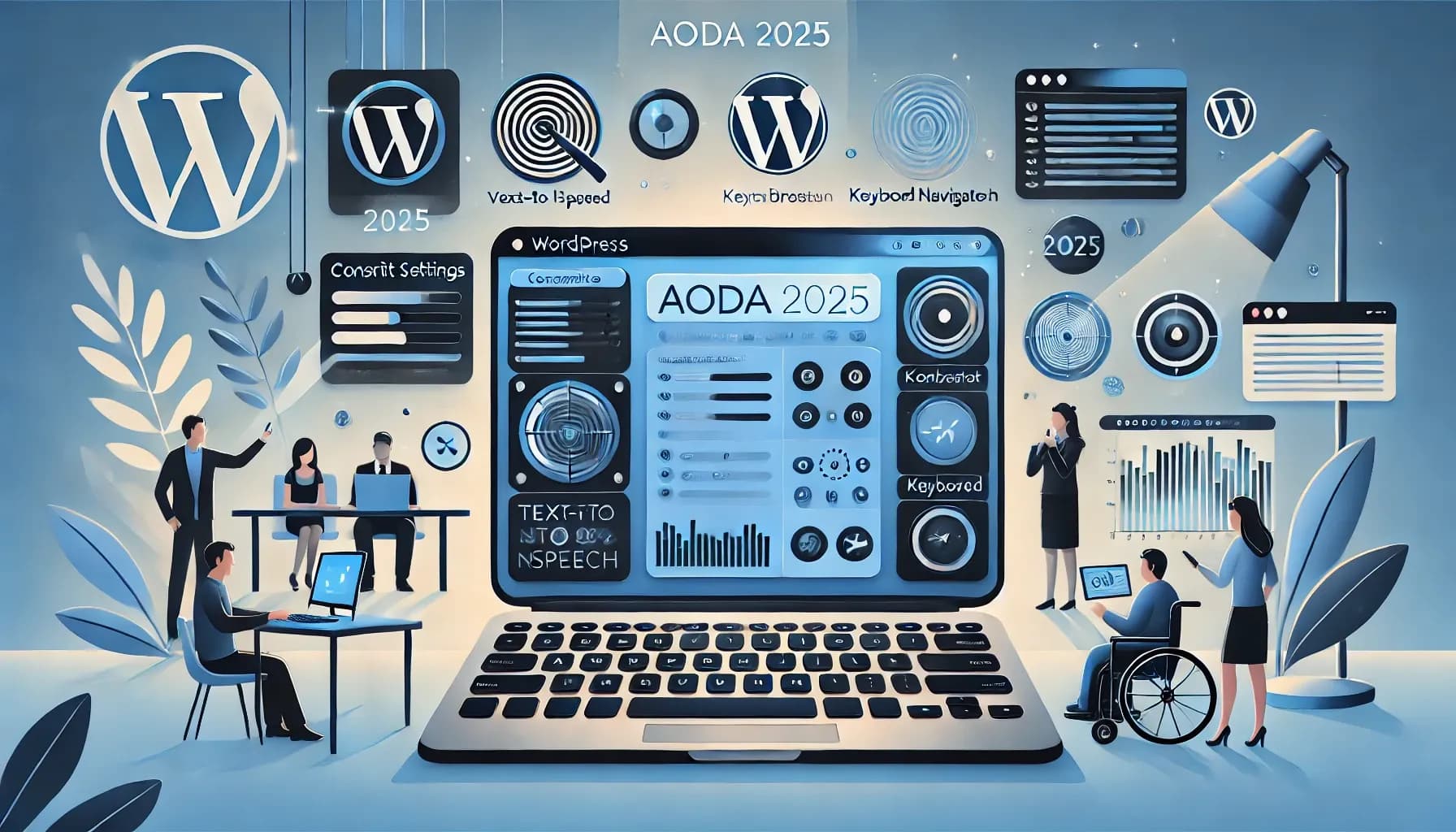
With over 43% of all websites built on WordPress, making the platform accessible has never mattered more. An inaccessible website is the equivalent of a locked door - and in 2026, rising awareness, stricter laws, and a commitment to digital inclusion have made accessibility non-negotiable. This guide covers why WordPress accessibility matters, the laws that apply (including AODA), the common challenges, the best plugins and themes, and the best practices to stay compliant.
TL;DR: Build to WCAG Level AA using an accessibility-ready theme (Astra, GeneratePress, OceanWP), fix the common barriers (contrast, alt text, keyboard, forms, captions), and use accessibility plugins to scan and remediate. If you operate in Ontario, AODA compliance is mandatory.
Why WordPress Accessibility Matters in 2026
Digital accessibility means designing sites everyone can use, including people who are blind or have low vision, are deaf or hard of hearing, or have motor or cognitive disabilities. According to the World Health Organization, over 1.3 billion people globally live with some form of disability - nearly 16% of the population - and in Canada, 22% of people aged 15 and older identify as having a disability. Yet a 2023 WebAIM study found 96.3% of the top one million website homepages had detectable WCAG failures. Accessible WordPress sites aren't just more inclusive - they're better for SEO and lower your legal risk.
The Legal Landscape: WCAG, ADA, AODA & the Accessible Canada Act
WordPress sites are governed by overlapping standards and laws, nearly all of which point to WCAG:
- WCAG / ADA: the Web Content Accessibility Guidelines are the technical standard the US ADA and most laws reference; Level AA is the target.
- AODA (Ontario): the Accessibility for Ontarians with Disabilities Act requires Ontario organizations with one or more employees to meet WCAG 2.0 Level AA for websites.
- Accessible Canada Act (ACA): also known informally as the Federal Accessibility Act, the ACA was passed in 2019 and aims to make Canada barrier-free by 2040. It applies to federally regulated sectors (banking, telecommunications, transportation) and aligns with WCAG 2.1 Level AA.
Common WordPress Accessibility Challenges
- Poor color contrast affecting readability.
- Missing alt text, preventing screen readers from interpreting images.
- Inadequate keyboard navigation for users with motor impairments.
- Non-compliant form fields and labels.
- Lack of captions or transcripts for multimedia content.
Best WordPress Accessibility Plugins & Tools
- WP Accessibility - fixes skip links, contrast issues, and missing form labels.
- Accessibility Checker - detailed reports on WCAG and AODA compliance gaps.
- UserWay Accessibility Widget - a customizable menu for text adjustments and contrast changes.
- WP ADA Compliance Check Basic - scans WordPress sites for ADA and AODA issues.
- Color Contrast Accessibility Validator - ensures text meets WCAG 2.1 Level AA contrast.
For platform-agnostic options and full reviews, see our guide to the best web accessibility testing tools.
Best Practices for Accessible WordPress Websites
Tools alone aren't enough - pair them with these practices:
- Choose an accessibility-ready theme such as Astra, GeneratePress, or OceanWP.
- Use proper heading structure (logical H1-H6) for screen reader navigation.
- Enhance keyboard navigation - ensure tab, enter, and arrow keys work everywhere.
- Add descriptive alt text to all meaningful images.
- Improve color contrast to meet WCAG 2.1 guidelines.
- Enable resizable text using relative units (em/rem) instead of fixed pixels.
- Ensure accessible forms with clear labels, focus indicators, and error messages.
- Provide multimedia accessibility with captions and transcripts.
How to Test and Maintain Compliance
Run an accessibility plugin scan, then validate manually with a keyboard and screen reader, since automation can't catch everything. For a thorough review, follow our accessibility audit checklist and baseline with the WCAG checker. Finally, monitor continuously - new posts, plugins, and theme updates can reintroduce issues - and consider an accessibility widget to give users on-demand adjustments.
Frequently Asked Questions
Why is WordPress accessibility important?
WordPress powers over 43% of all websites. Beyond inclusion for the 1.3 billion+ people with disabilities worldwide, accessibility reduces legal risk and improves SEO - and a 2023 WebAIM study found 96.3% of top homepages had WCAG failures.
What are the best WordPress accessibility plugins?
WP Accessibility, Accessibility Checker, the UserWay widget, WP ADA Compliance Check Basic, and the Color Contrast Accessibility Validator.
Does a WordPress site need to be AODA compliant?
If you operate in Ontario with one or more employees, AODA applies and requires WCAG 2.0 Level AA. Federally regulated Canadian organizations must also meet the Accessible Canada Act (WCAG 2.1 AA).
What is an accessibility-ready WordPress theme?
A theme built with proper semantics, keyboard support, and good contrast - for example Astra, GeneratePress, or OceanWP.
How do I make my WordPress site WCAG compliant?
Start with an accessibility-ready theme, use proper headings, add alt text, ensure keyboard navigation and accessible forms, meet contrast requirements, use relative font sizes, then test with a plugin plus a manual keyboard and screen reader check.
Conclusion
WordPress makes accessibility achievable for everyone - if you build it in deliberately. Start with an accessibility-ready theme, meet WCAG Level AA, use the right plugins, follow the best practices above, and understand the laws that apply (AODA in Ontario, the ACA federally). Do that, and your WordPress site becomes inclusive, compliant, and better for both users and search engines.
Quick Questions
Tap to ask AI about this article