How to Measure the Success of Your Web Accessibility Efforts
Quick Questions
Tap to ask AI about this article
Tap to ask AI about this article
Ready to make your website accessible? Engage with our team or start a free trial today.
Web accessibility is more than a compliance requirement—it ensures that your website can be used by everyone, including people with disabilities. Implementing accessibility features is important, but knowing whether your efforts are effective is crucial. Measuring the success of your accessibility initiatives allows you to identify gaps, improve user experience, and demonstrate your commitment to inclusivity. In this guide, we’ll cover practical methods, tools, and strategies to track and evaluate your accessibility performance effectively.
An accessibility audit evaluates your website against recognized standards like WCAG 2.1. Regular audits help identify both existing and emerging issues.
Tools recommended by Webability:
Audits should be scheduled at least twice a year and whenever you release significant updates.
Direct feedback from users, especially those using assistive technologies, provides insight beyond automated testing.
Ways to gather feedback:
Feedback forms specifically for accessibility issues.
Web analytics can reveal user behavior trends that indicate accessibility challenges.
Metrics to monitor:
By analyzing these metrics, you can identify friction points and refine your accessibility features.
Testing with real assistive tools ensures your site works as intended for all users.
Key tools:
Simulating actual user scenarios helps uncover issues that automated tools often miss.
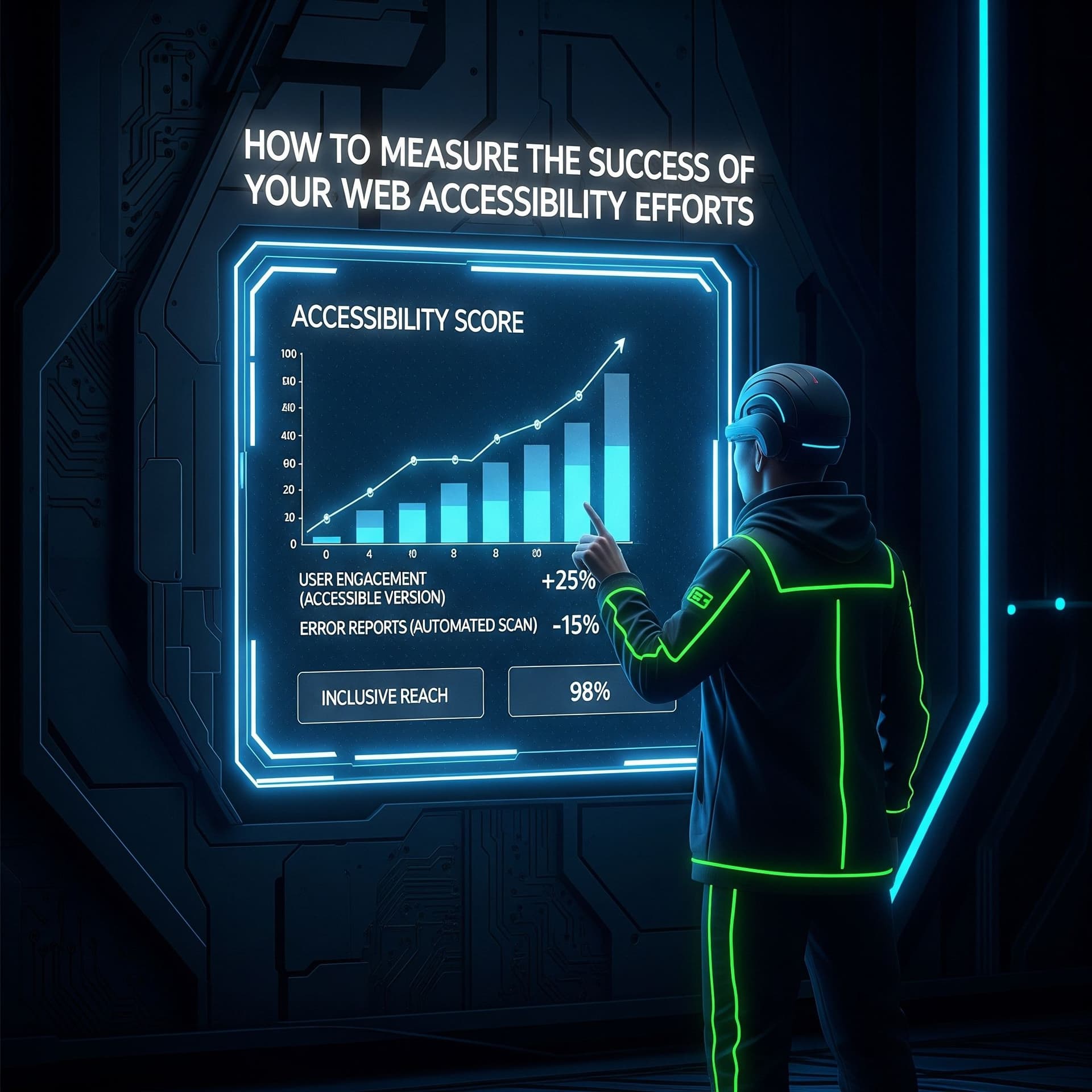
Key Performance Indicators (KPIs) provide measurable evidence of accessibility improvements.
Examples:
Tracking KPIs over time ensures continuous improvement and accountability.
Webability offers tools and services designed to help organizations maintain accessibility effortlessly:
These tools make it easier to integrate accessibility monitoring into your regular workflow.
Measuring the success of your web accessibility efforts requires a combination of audits, user feedback, analytics, assistive technology testing, KPIs, and specialized tools like Webability. Regular evaluation ensures your website remains inclusive, enhances user experience, and stays compliant with accessibility standards. Accessibility is an ongoing commitment, and monitoring your progress ensures your site continues to meet the needs of all users.
Q1: How often should accessibility be audited?
At a minimum, twice a year, or whenever major website updates are made.
Q2: Can automated tools alone measure accessibility success?
No. While they catch many issues, manual testing and real user feedback are essential for a complete picture.
Q3: What KPIs are most important?
Track issue resolution rates, WCAG compliance percentage, and user satisfaction from people with disabilities.
Q4: How can Webability help track accessibility?
Webability provides dashboards, reports, and resources that make monitoring compliance simple and actionable.
Q5: Is accessibility a one-time task?
No. It is an ongoing process that requires continuous evaluation and updates to ensure all users can access your content seamlessly.