Using Online Textbooks: Your Complete Guide 2026

Sidharth Nayyar
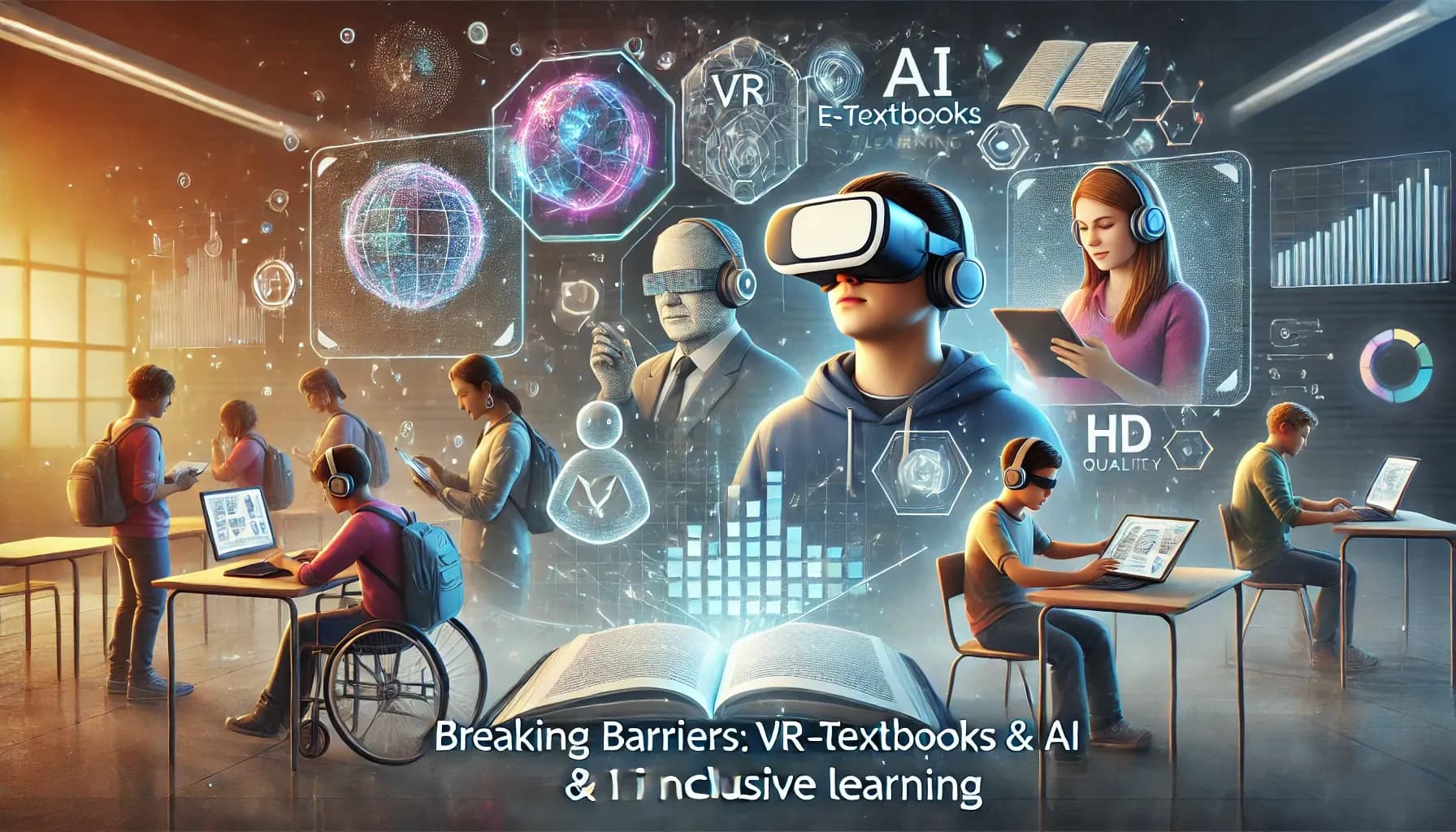
You open the syllabus, click the textbook link, and realize the “book” isn't a book in the old sense at all. It has quizzes inside the chapter, videos next to key concepts, clickable glossary terms, and maybe a discussion prompt or simulation embedded halfway through the reading. For students, that can feel efficient or chaotic. For faculty, it can feel like a better teaching tool or one more system to support. For institutions, it raises bigger questions about access, equity, and compliance.
That's why using online textbooks well takes more than logging in and scrolling. The format can support stronger study habits, flexible pacing, and broader access, but only when the platform, course design, and support systems work together. The practical difference comes from how people use the tools, what backup plans exist when access breaks, and whether accessibility is built into the experience from the start.
TL;DR
- Online textbooks have evolved from static digital copies into interactive learning environments with multimedia, practice, and embedded support.
- Students get the most value when they use search, notes, highlights, personalization settings, and progress tracking deliberately.
- Offline access matters more than many guides admit. Some platforms limit saving or printing, so contingency planning is part of good study practice.
- Access models affect equity. Free, immediate access at the start of a course can improve outcomes, especially for financially aid-eligible and historically underserved students.
- Accessibility should be treated as an enabler. Text-to-speech, keyboard navigation, readable layouts, translation, screen reader support, and personalization tools make learning more usable for more people.
- Instructors and institutions need a selection checklist that includes content quality, accessibility, LMS fit, support, privacy, and day-one access.
The Evolution from Print to Interactive Learning
The first time many students use an online textbook, they expect a PDF with a search bar. What they often find instead is a study environment. Chapters link to videos, examples open into guided practice, and terms connect to definitions or related materials without forcing a trip to another site.
That shift didn't happen overnight. Online textbooks became a major part of open educational resources after the first widely recognized U.S. open textbook initiatives in the late 1990s and early 2000s, and the Open Textbook Library now catalogs thousands of peer-reviewed open textbooks used by colleges and universities worldwide, as reflected in the Open Textbook Library's statistics text listing. In practice, that means digital course materials are no longer a side option. They sit at the center of many blended and fully online courses.
A useful example comes from statistics education. OpenStax's Introductory Statistics is built for mainstream higher education use, and that matters because statistics is a core subject where students often need repeated explanation, examples, and practice in close proximity. A well-designed online textbook can provide all three without forcing students to juggle separate tabs and disconnected files.
Practical rule: Treat an online textbook as a learning workspace, not just a reading assignment.
For faculty and support teams, this changes the implementation question. The issue isn't whether a class uses “digital content.” The issue is whether that content supports navigation, pacing, accessibility, practice, and reliable access in the actual conditions students face.
That's also why broader strategies for accessible education matter. The textbook is often the first thing students encounter in a course, and if that first touchpoint is usable, flexible, and readable, the rest of the learning experience starts on firmer ground.
Unlocking Your Online Textbook's Full Potential
Students often underuse online textbooks because they read them like paper books on a screen. That leaves a lot of value untouched. The strongest study results usually come from active use of the platform's built-in tools.
A 2026 study in the International Journal of Mathematical Education in Science and Technology reported that learners value the online textbook format for flexibility, convenience, and easier access to course materials, and that they can revisit explanations and move at their own pace, as described through the Online Statistics textbook resource. That matches what effective study behavior looks like in practice.

Master navigation before you start reading
Don't begin with page one and hope the structure makes sense. Spend a few minutes mapping the book.
Use this quick sequence:
- Scan the chapter layout. Look for learning objectives, summaries, practice sets, and embedded media.
- Test the search tool. Search for two or three course terms you know will come back later.
- Check how links behave. Some platforms open pop-ups, others jump to another location, and some launch outside resources.
- Find the accessibility and display settings. Font size, contrast, read-aloud support, and reading mode are study tools, not special accommodations.
This small setup step saves time later. Students who know where examples, definitions, and review material live usually spend less energy hunting and more energy learning.
Use highlighting and notes with restraint
A common mistake is turning the whole chapter yellow. Highlighting works when it creates a second-pass study guide, not when it duplicates the entire page.
A cleaner method:
- Highlight definitions sparingly so you can review core vocabulary fast.
- Annotate worked examples with your own explanation of why each step matters.
- Mark confusion points with a short note like “ask in office hours” or “review with video.”
- Tag exam-relevant sections if the platform supports folders, bookmarks, or labels.
If your notes don't make sense without reopening the chapter, they're too thin. If they repeat the chapter line by line, they're too heavy.
Make the interactive elements do real work
When a textbook includes simulations, demonstrations, or self-check questions, students sometimes skip them because they seem optional. In many courses, they're the part that turns recognition into understanding.
Here's a simple way to use them well:
| Feature | Weak use | Better use |
|---|---|---|
| Search | Looking up one missed term | Building a quick review trail before quizzes |
| Embedded quizzes | Clicking until correct | Writing down why the distractors were wrong |
| Videos | Watching passively | Pausing to predict the next step |
| Simulations | Exploring briefly | Testing one variable at a time |
Personalize the reading environment
Screen fatigue is real. Focus drops faster when the text is cramped, contrast is poor, or the layout feels noisy.
That's where personalization matters. Adjust text size, line spacing, color settings, and reading mode before a long study session. If you use text-to-speech, synchronized highlighting, or reading supports, review WebAbility insights on reading assistive tech for practical ways students combine these tools with standard coursework.
Protect your attention
Online textbooks live on the same device as messages, social feeds, and ten open tabs. That's the hidden tax of digital study.
Try a low-friction routine:
- Read in one window only. Split-screen only when you're actively taking notes.
- Set a chapter goal instead of an open-ended reading block.
- Pause after each subsection and explain the idea aloud or in writing.
- Close unrelated tabs before starting practice questions.
Using online textbooks effectively isn't about squeezing every feature into every session. It's about knowing which tools help you move from passive exposure to active recall.
Smart Workflows for Notes Citations and Offline Use
A typical study session rarely ends inside the textbook platform. Students read a section, copy a note into OneNote or Notion, pull a quote for a paper, check a source in Zotero, and then realize they may need that chapter later without reliable internet.
That last part gets ignored too often.

Build a note flow you'll actually keep using
Start with one chapter and one destination for notes. If your class materials already live in OneNote, don't invent a second system. If you organize assignments in Notion, send your textbook notes there.
A workable pattern looks like this:
- Read one subsection
- Pull out the main concept in your own words
- Save one important example
- Capture one open question
- Add the page or section reference immediately
That last step matters. Citation cleanup gets messy when students leave source details for later.
Keep citations attached to the reading
For research-heavy courses, the easiest habit is to capture bibliographic details as soon as you use the text. If the platform provides a citation tool, verify the output before trusting it. If it doesn't, save the title, chapter, author or editor, edition, and stable URL if one exists through your library or platform.
Some instructors also post PDFs alongside web readers. If that happens, make sure those files are usable too. A strong PDF accessibility guide can help faculty and support teams understand what students need when a PDF becomes the fallback format.
Plan for weak connectivity before you need it
Guidance on online textbooks often misses offline access. Some platforms restrict how many pages can be saved, which creates problems for students who need fallback workflows such as downloadable EPUB or Word versions, especially during weak connectivity or proctored testing, as noted in this guidance on questions to ask about digital textbooks.
That issue shows up in ordinary situations:
- A commuter studies on a train with unstable service
- A student travels for athletics or fieldwork
- Campus Wi-Fi drops during exam week
- A proctored setting limits browser behavior
- A screen reader workflow works better in an alternate file format
Don't assume “available online” means “available when I need it.”
A simple contingency checklist
Before a major assignment or exam, students should answer these questions:
| Question | What to verify |
|---|---|
| Can I read this offline? | Chapter download, print option, or alternate file |
| Can I keep my notes if the platform fails? | Export, copy, or backup notes elsewhere |
| Can I cite this later? | Full source details saved now |
| Can I access it with my tools? | Screen reader, keyboard, TTS, zoom, or alternate format |
A short tutorial can help students visualize these steps in practice.
For instructors, the practical takeaway is simple. If a textbook is central to the course, then backup access is part of course design, not an edge case. For students, the smartest workflow is the one that still works when the platform doesn't.
A Guide to Inclusive and Accessible Online Textbooks
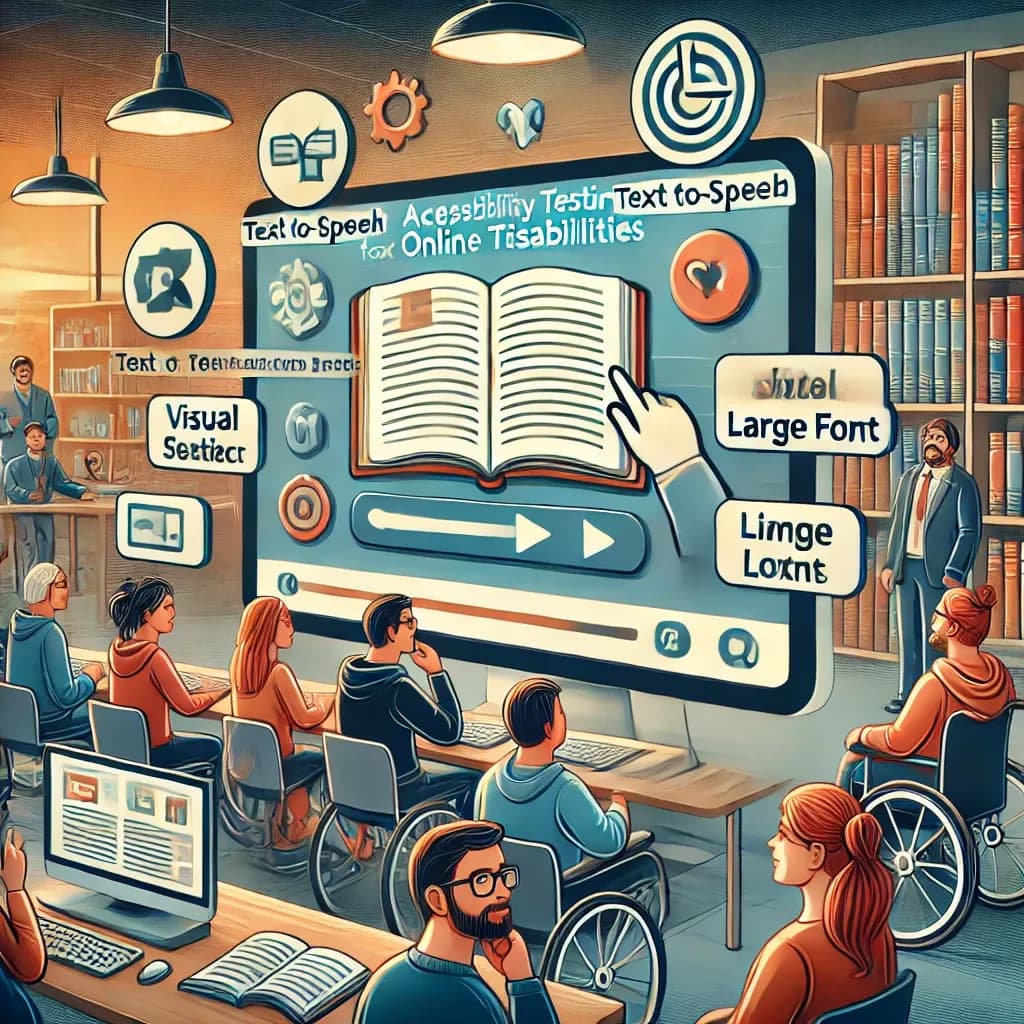
Accessibility isn't a layer you add after adoption. It shapes whether students can read, interact with, annotate, review, and complete work without unnecessary friction. In online textbooks, that means the basics matter a lot: readable text, keyboard support, text-to-speech compatibility, clear headings, strong contrast, meaningful link text, and layouts that hold up under zoom or reflow.
When these elements are present, more students benefit than people often expect. A commuter using audio support, a multilingual student adjusting display settings, a dyslexic learner using a different font, and a student recovering from a concussion may all rely on different combinations of the same core features.
What students should look for immediately
Students shouldn't wait until midterm stress to discover whether a platform works for them. A quick access check in the first week can prevent a lot of frustration.
Look for these signals:
- Keyboard navigation that lets you move through menus, content areas, quizzes, and buttons logically
- Text-to-speech support that reads actual content in a sensible order
- Adjustable display settings such as text size, contrast, spacing, and reading modes
- Compatible structure for screen readers, including headings, labels, and identifiable controls
- Accessible alternatives for charts, media, or interactive elements
If a platform offers additional support layers, that can improve usability further. For example, some institutions evaluate platform accessibility features as part of their broader digital learning stack so students can tailor the interface to fit their needs.

Why managed accessibility support helps
Built-in platform accessibility is important, but support layers can make the experience more usable and more consistent across courses. That's especially helpful when textbook platforms vary in quality or when institutions run content through multiple systems such as LMS pages, library portals, embedded readers, and uploaded files.
Managed accessibility approaches and accessibility widgets can help users personalize their experience with tools such as contrast controls, text scaling, dyslexia-friendly fonts, translation, reading aids, and personal profiles. For many learners, that means less time fighting the interface and more time engaging with the material.
Accessibility works best when students can adjust the experience themselves, quickly and without asking permission every time.
For teams responsible for audits and ongoing checks, making online textbooks accessible requires attention not only to technical compliance but also to cognitive load, reading flow, navigation consistency, and the way embedded learning tools behave.
One option institutions use in that process is WebAbility.io, which provides accessibility scanning, monitoring, reporting, and a widget with user controls such as keyboard navigation, contrast modes, text scaling, text-to-speech, translation, and profile-based personalization. In practice, tools like that can support textbook platforms, course pages, and related digital assets across a broader learning environment.
Inclusive design improves ordinary learning
Faculty sometimes frame accessibility as a special-case concern. In online textbooks, that view breaks down quickly. Features that support disabled students also help anyone reading under pressure, on a small screen, in a noisy environment, or in a second language.
The most effective mindset is simple. Accessibility isn't separate from good digital instruction. It is good digital instruction.
For Instructors and Institutions Ensuring Success and Compliance
When institutions adopt online textbooks, they're not just choosing content. They're choosing an access model, a support burden, and a compliance posture. A strong rollout depends on asking better questions before procurement and during implementation.
One of the most important questions is whether students get access on day one without extra hurdles. A Georgetown study found that when students received free digital textbooks at the start of a course, grades improved and withdrawals fell, with especially strong gains for financially aid-eligible and historically underserved students, according to Georgetown's coverage of free digital textbooks and equity.

What to evaluate before adoption
A textbook can have strong academic content and still fail in implementation. Selection teams should review the full student experience, not just the sample chapter.
A practical buyer checklist includes:
- User experience. Can students find chapters, notes, assignments, and support without guesswork?
- Accessibility alignment. Does the platform support WCAG 2.2 AA and Section 508 goals in real use, not just in vendor language?
- LMS integration. Can faculty link reliably to assigned sections and track usage where appropriate?
- Support workflows. Who handles access failures, broken links, alternate formats, and accommodation requests?
- Privacy and security. What learner data is collected, and who can access it?
Where implementations usually break
Problems usually come from operations, not ambition. Faculty may assume library access and course-platform access are the same thing. Students may face multiple sign-ins, expiring codes, limited device compatibility, or inaccessible fallback files. Disability services may be asked to patch issues that should have been addressed during adoption.
That's why rollout planning needs concrete ownership.
| Decision area | Who should own it |
|---|---|
| Content review | Faculty and curriculum leaders |
| Accessibility review | Accessibility staff, disability services, procurement |
| LMS setup | Instructional design and LMS admins |
| Student support path | Help desk, library, academic support |
| Vendor accountability | Procurement and legal/compliance teams |
Compliance is ongoing, not one approval step
A platform that looks acceptable in a pilot can still drift once new content, custom embeds, updates, and third-party tools enter the picture. Institutions need a repeatable process for monitoring textbook pages, linked assets, and course delivery environments over time.
That includes checking:
- Interactive content behavior
- Uploaded PDFs and handouts
- Embedded media controls
- Keyboard flow across course pages
- Alternative access when a platform fails
A compliant purchase can still create an inaccessible course if the implementation is weak.
For instructors, the immediate opportunity is to reduce avoidable barriers. Choose materials students can open on day one. Verify that key chapters load well on mobile. Confirm that reading assignments don't depend on hidden clicks or inaccessible embedded tools. Tell students where to get help before they need it.
For institutions, the larger task is governance. The textbook, LMS, library systems, and support services should feel like one coordinated ecosystem to the learner, even if they're managed by different teams.
Building a Better Digital Learning Ecosystem Together
Using online textbooks well is shared work. Students need study habits that fit the medium. Instructors need to design around real usage, not ideal usage. Institutions need to fund access, evaluate accessibility, and support the entire workflow around the text.
When those pieces line up, online textbooks do more than replace print. They support flexible pacing, richer explanation, embedded practice, and a learning experience that can adapt to different needs and contexts. That's especially important in courses where students benefit from revisiting content, switching modalities, or using support tools without delay.
The future of digital course materials won't be defined by whether the book lives on a screen. It will be defined by whether the learning environment is usable, inclusive, and reliable. Teams that build online learning platforms already know the core challenge. Content, interface, accessibility, and support can't live in separate planning tracks.
A better ecosystem has a few recognizable qualities:
- Students get access immediately
- Faculty can teach without workarounds
- Accessibility tools are available and easy to use
- Offline and alternate-format plans exist
- Support teams know who owns what
That's a practical standard, not an abstract one. If a student can open the book, browse it, personalize it, cite it, study from it offline when needed, and complete the course without unnecessary barriers, the technology is doing its job.
Online textbooks are already part of mainstream education. The next step is making sure they work well for the people who rely on them every day.
If you're evaluating textbook platforms, course pages, or student support workflows, WebAbility.io offers tools and guidance that can help your team assess accessibility, monitor issues over time, and build a more usable digital learning environment for everyone.
Quick Questions
Tap to ask AI about this article