Disability Discrimination & ADA Lawsuit Settlement Amounts (2026)

Sidharth Nayyar
Disability Discrimination & ADA Lawsuit Settlement Amounts (2026)
This guide is general information, not legal advice. Figures below are drawn from the cited industry sources and illustrate ranges, not guarantees; consult a qualified attorney for advice on your specific situation.
Disability discrimination and ADA accessibility claims carry real financial risk - but "how much does an ADA lawsuit cost?" has no single answer. Amounts swing dramatically by business size, jurisdiction, and how far a matter proceeds. This guide explains the laws behind these claims, typical settlement ranges, the hidden total cost, the factors that drive payouts, a real-world example, and - most importantly - how to reduce your exposure proactively.
TL;DR: Key Takeaways
TL;DR: Settlements scale with revenue and brand visibility. Per a TestParty.ai overview, small businesses often settle for $5,000-$10,000 and mid-market firms for $30,000-$100,000+; per WCAG Safe, the true total cost (defense, experts, remediation) can reach $55,000-$270,000+. The cheapest path is prevention: meet WCAG standards before a claim ever lands.
Quick Guide To Disability Discrimination Settlement Amounts
As an experienced leader, you know that understanding real-world financial risk is essential. Disability discrimination claims are not just theoretical legal issues; they are concrete liabilities that can impact your bottom line. We're here to provide the expert insights and firsthand experience you need to navigate this complex area.
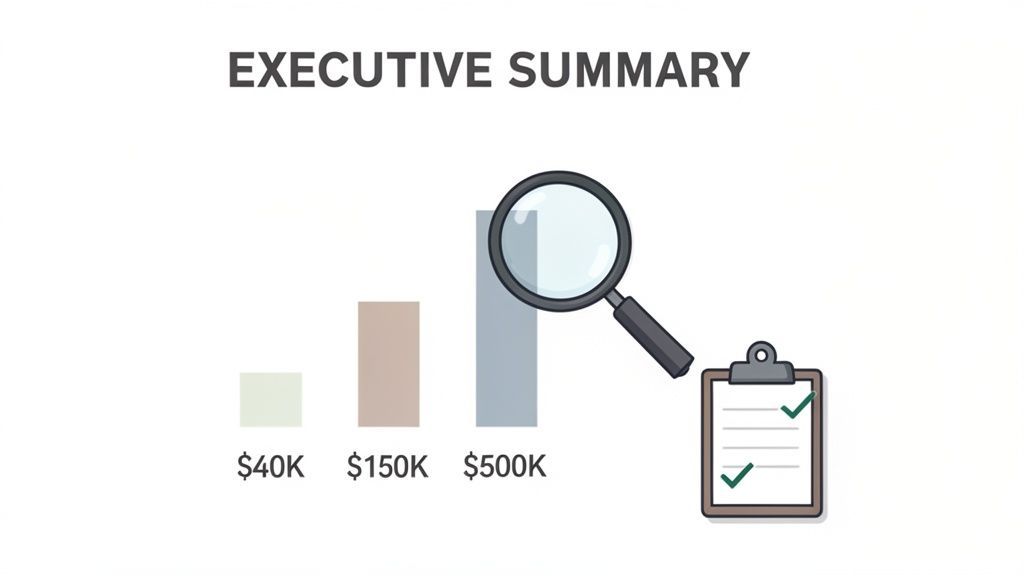
So, what do these liabilities look like? While broad EEOC data indicates an average settlement of around $40,000 for all employment discrimination types, this figure is just a baseline and can be misleadingly low for disability-specific cases.
When focusing on disability discrimination, especially in states with strong employee protections, settlement values often increase significantly. It's common for settlements to fall within the $75,000 to $500,000 range. These amounts often escalate dramatically when an employer is found to have retaliated against an employee for requesting a reasonable accommodation. You can see a breakdown of real-world settlement data for more experienced analysis of how these cases resolve.
Understanding The Financial Stakes
To provide a clearer picture of potential exposure, here are typical settlement ranges based on the claim's severity. This data reflects our extensive experience in handling these matters.
Typical Settlement Ranges For Disability Discrimination Claims
This table gives a high-level look at what organizations can expect, depending on the circumstances of the case.
| Claim Type / Context | Typical Settlement Range | Notes |
|---|---|---|
| Standard Claims (EEOC Avg) | $40,000 - $75,000 | These often involve straightforward cases with clear evidence but limited financial or emotional damages. |
| Moderate Severity | $75,000 - $250,000 | These claims typically involve significant emotional distress or a clear failure to provide a reasonable accommodation. |
| High Severity / Retaliation | $250,000 - $500,000+ | The highest awards often involve wrongful termination, a pattern of discrimination, or punitive damages for intentional misconduct. |
As demonstrated, the potential costs rise sharply with the seriousness of an employer's actions.
The key takeaway from our experience is that a seemingly minor misstep—like ignoring an accommodation request—can quickly snowball into a six-figure liability, especially if viewed as willful neglect or retaliation.
This guide explains the "what" and "how much." Next, we'll delve into the why behind these numbers and, more importantly, how you can proactively manage these risks with robust compliance and accessibility programs. Protecting your organization starts with understanding your obligations, and a trusted platform like WebAbility.io offers the framework to manage them effectively and open your business to new opportunities.
The Laws Driving Disability Discrimination & ADA Claims
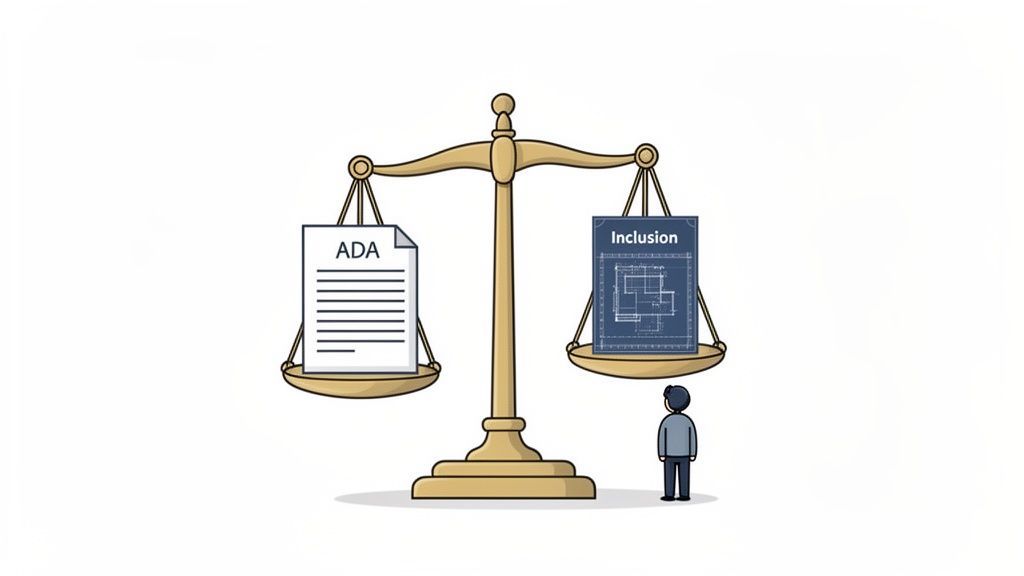
To understand settlement amounts, start with the legal framework. The foundation is the Americans with Disabilities Act (ADA), a landmark 1990 civil rights law prohibiting discrimination against people with disabilities across employment, education, and public life. Two parts matter most for businesses:
- Title I (Employment) ensures fairness in hiring and the workplace.
- Title III (Public Accommodations) requires businesses serving the public - increasingly interpreted to include their websites and apps - to be accessible.
For a primer on how the ADA connects to web standards, see our beginner's guide to WCAG and ADA compliance.
What the ADA Expects From Your Business
The ADA requires more than just avoiding intentional discrimination; it mandates proactive creation of an accessible environment. This responsibility is built on two key concepts.
Reasonable Accommodation: This is any change to a job or work environment that enables an individual with a disability to have equal opportunity. Examples include providing a screen reader for a visually impaired employee or offering a flexible schedule for someone with a chronic illness.
Undue Hardship: A business is not required to provide an accommodation if it would cause "significant difficulty or expense." Be aware: this is a very high standard. A court will examine a company's size, financial resources, and the nature of the request before accepting an "undue hardship" defense.
Think of it this way: providing an ergonomic chair for an employee with a back issue is a classic reasonable accommodation. Conversely, a small local shop might not be required to completely rebuild its historic location. The law demands a good-faith effort to find a workable solution.
The EEOC and Tougher State Laws
The Equal Employment Opportunity Commission (EEOC) is the federal agency responsible for enforcing the ADA's employment rules. They investigate claims, mediate settlements, and can file lawsuits on behalf of employees. The EEOC's actions and guidance are a benchmark for compliance nationwide.
However, federal law is not the final word. Many states have their own anti-discrimination laws, such as California's Fair Employment and Housing Act (FEHA), which often provide even stronger protections and allow for larger damages than the ADA. This dual layer of legal requirements makes a reactive approach highly risky. Our experience confirms that building an inclusive foundation from the start is far more effective than waiting for a complaint.
A crucial part of that foundation is digital accessibility. For companies seeking to proactively manage risk, partnering with expert ada website compliance services can provide a clear path to success. A proactive strategy is always the best defense against discrimination claims and the associated financial burdens.
What Are Typical Settlement Amounts?
The phrase "ADA lawsuit settlement amounts" covers very different scenarios - a demand letter is not the same as a filed lawsuit, and a single-location business isn't exposed like a multi-brand retailer. The clearest published breakdown in our source set comes from a TestParty.ai settlement cost overview, which reports:
- Small businesses (under $5M revenue): often $5,000-$10,000.
- Mid-market e-commerce: $30,000-$100,000+.
- Enterprises: $150,000+ in class actions.
- New York defendants may see a 20%-50% uplift due to forum shopping.
The pattern is clear: settlement pressure tracks revenue, scale, and brand visibility - and larger sites create larger factual records (more templates, transactions, and integrations mean more places for barriers to appear).
The True Cost Beyond the Settlement
The settlement check is just the visible part. According to WCAG Safe's ADA lawsuit statistics, the total per-lawsuit burden can reach $55,000-$270,000+ once everything is included:
- Legal defense: $30,000-$125,000.
- Expert witnesses: $5,000-$20,000.
- Post-lawsuit remediation: $10,000-$100,000+.
The same source reports that demand letters average $5,000 while class actions average $400,000. Teams that budget only for the settlement miss the defense spend, technical assessment, expert review, and engineering interruption that arrive immediately after a claim lands.
Key Factors That Influence Settlement Amounts
- Business size and revenue - plaintiffs assess ability to pay.
- Jurisdiction - some venues (e.g., New York) drive higher amounts.
- Procedural stage - demand letter vs. filed suit vs. class action.
- Severity and number of barriers - larger, more complex sites expose more issues.
- Good-faith effort - documented, proactive accessibility work can reduce exposure; ignoring or refusing to engage can escalate damages.
Pinpointing a disability discrimination settlement amount isn't a simple calculation; it's a dynamic process where several key factors can dramatically influence the final figure. Understanding these drivers is essential for any organization to grasp its financial exposure and focus its risk management efforts. Our firsthand experience in these negotiations shows that the following elements have the biggest impact.
Economic Damages: The Foundation of a Claim
The most tangible part of any settlement is economic damages. This represents the measurable financial loss an employee suffered as a direct result of discrimination. Think of it as the concrete starting point upon which the rest of the claim is built.
These damages aim to make the employee financially whole and typically include:
- Back Pay: Salary, wages, and benefits missed from the date of termination or denied promotion until a settlement is reached.
- Front Pay: If reinstatement is not feasible, front pay covers future lost earnings while the employee seeks comparable work.
- Lost Benefits: This includes the value of health insurance, 401(k) contributions, and other lost perks.
For example, an employee earning $80,000 annually who was wrongfully terminated could have a baseline claim of $80,000 in back pay after a year. This figure, plus the value of lost benefits, establishes the initial floor for negotiations.
Emotional Distress: The Human Cost
Discrimination extends beyond financial loss; it inflicts a significant human toll. Emotional distress damages are intended to compensate for this psychological harm and can substantially increase a claim's value.
This isn't about mere hurt feelings. It's compensation for tangible suffering, including anxiety, depression, insomnia, and damage to one's professional reputation and dignity.
Our experience in court and mediation confirms that the psychological harm of being targeted or fired due to a disability is recognized as a real, quantifiable injury. A well-documented claim for emotional suffering, often supported by testimony from therapists or doctors, can easily double or triple the economic damages alone.
While subjective, this factor's effect on disability discrimination settlement amounts is undeniable. It shifts the focus from a simple wage calculation to a deeper accounting of personal harm.
Punitive Damages and Retaliation: The Settlement Multipliers
If economic damages are the foundation and emotional distress adds the next level, then punitive damages and retaliation are the factors that can turn the case into a skyscraper. These two elements most often lead to massive, six or even seven-figure settlements.
Punitive damages are not about compensating the employee. They are designed to punish the employer for egregious or malicious behavior—when a company knowingly broke the law. This sends a powerful message that flagrant disregard for civil rights has severe consequences.
Even more impactful is a retaliation claim. This occurs when an employer penalizes an employee for exercising their legal rights, such as:
- Requesting a reasonable accommodation.
- Filing a complaint with HR or the EEOC.
- Serving as a witness in another discrimination investigation.
Retaliation claims are explosive because they create a second, often clearer, legal violation. The original discrimination claim might be debatable, but firing someone for complaining about it is a powerful piece of evidence for the plaintiff. Settlements involving retaliation often start in the $225,000 range and can soar past $500,000. The financial fallout can be devastating, as detailed in our guide on the cost of ADA non-compliance.
Real-World Examples Of Costly Disability Discrimination Cases
Statistics tell part of the story; actual cases show how a single misstep escalates. One of the costliest employer mistakes is refusing to engage in the interactive process or denying a reasonable accommodation - which can signal bad faith to a judge or jury. In a recent EEOC case, a jury awarded $1.675 million to a qualified deaf applicant who was refused a job. The breakdown is revealing: only $25,000 for back pay and $150,000 for emotional distress, but $1.5 million in punitive damages - showing how much weight courts place on willful non-compliance.
The Staggering Cost of Ignoring Accommodation
One of the most costly mistakes an employer can make is failing to engage in the interactive process or denying a reasonable accommodation outright. From our experience, when a company refuses to even discuss potential solutions, it signals bad faith to a judge or jury.
This is when staggering verdicts occur. A recent EEOC case provides a powerful example: a jury awarded $1.675 million to a qualified deaf applicant who was refused a job. The breakdown is revealing: only $25,000 for back pay and $150,000 for emotional distress, but a massive $1.5 million in punitive damages. You can read the full details of this EEOC case for a closer look.
This verdict is a stark reminder that punitive damages can dwarf all other compensation. The jury wasn't just compensating the applicant; they were punishing the company and sending a clear signal that creating barriers for qualified people with disabilities carries a heavy price.
When Retaliation Multiplies The Settlement Amount
Another certain way to turn a difficult situation into a catastrophe is retaliation. Firing, demoting, or punishing an employee for requesting an accommodation or filing a complaint is a separate legal violation, and the penalty is often steeper than for the original discriminatory act.
Consider a case where an employee who faced both discrimination and retaliation secured a $3 million settlement. The company's initial offer to resolve the matter was just $25,000. They completely misjudged how their retaliatory actions had destroyed their legal standing and inflated their financial risk.
The lesson from our experience is clear: the initial mistake is damaging, but it's often the company's reaction—punishing the employee for speaking up—that leads to the most financially devastating outcomes.
This flowchart breaks down how different factors contribute to the final settlement amount, from tangible losses to punitive actions. 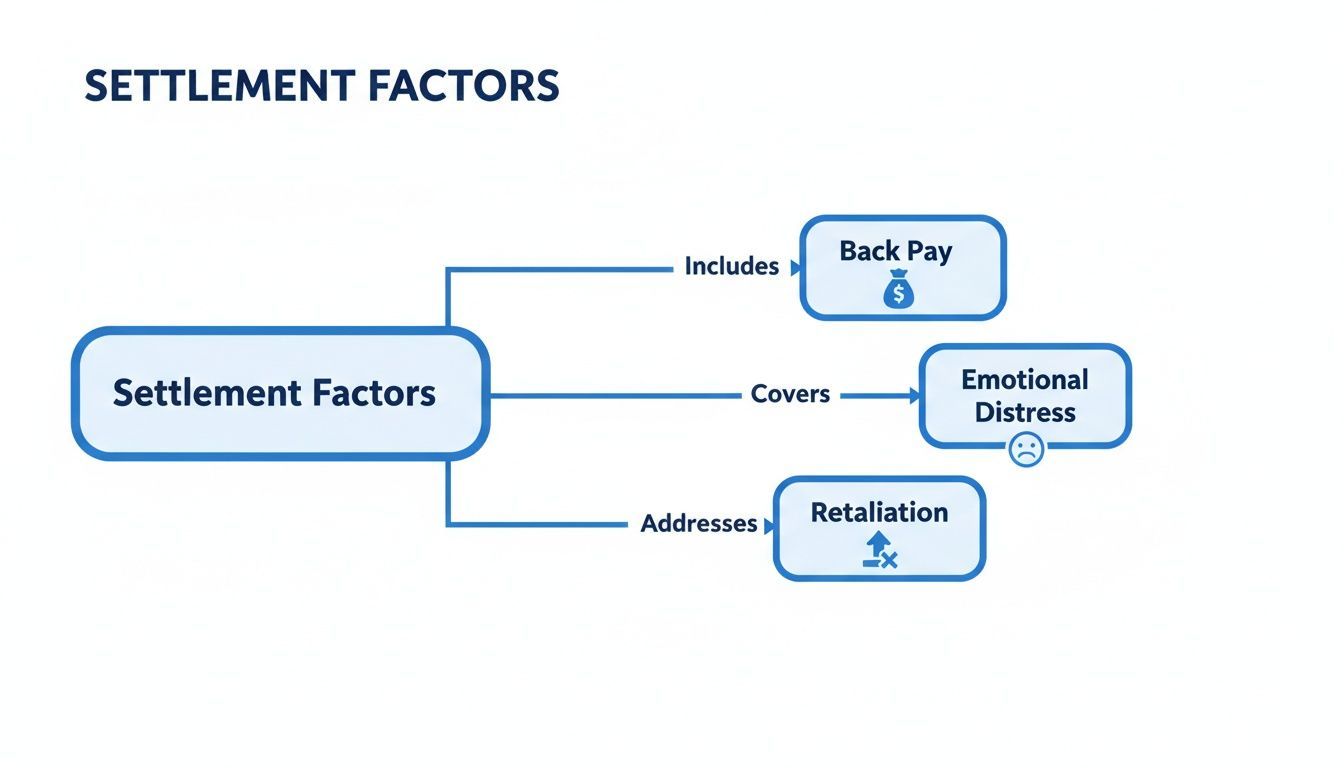 As you can see, back pay may set the floor, but it’s the less tangible—and often more explosive—elements like emotional distress and retaliation that cause settlement figures to skyrocket.
These are not just cautionary tales; they are a call to action. They highlight the absolute necessity of a documented, good-faith process for every accommodation request and a zero-tolerance policy for retaliation. The risks in web accessibility lawsuits follow a similar pattern, where prevention is always the best strategy. Learning from these expensive failures can help your organization build a more inclusive and legally resilient workplace.
How to Proactively Reduce Your Legal Exposure
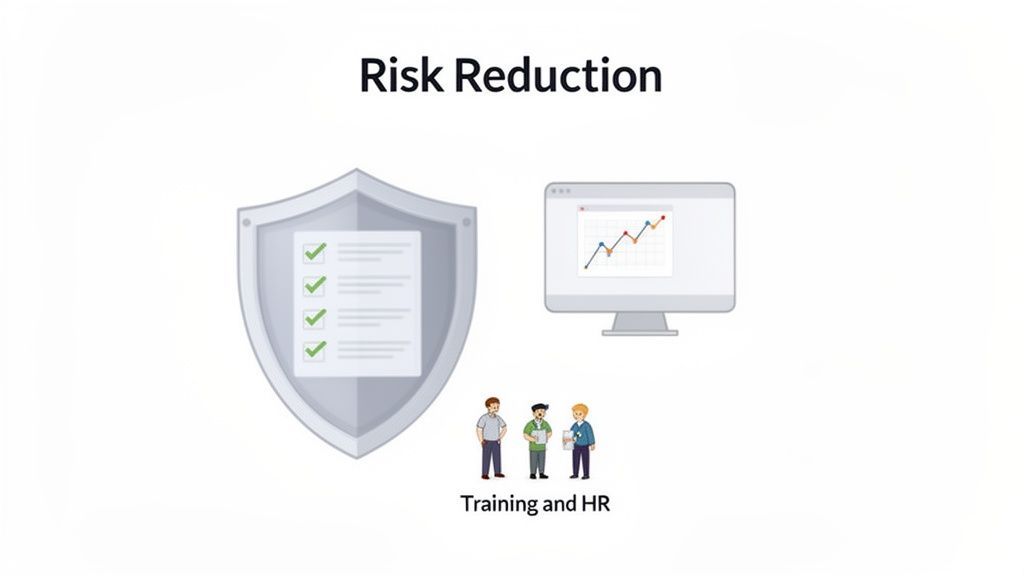
Prevention is dramatically cheaper than defense. To get ahead of claims:
- Run an accessibility audit using our audit checklist and the right testing tools to find barriers.
- Remediate to WCAG 2.1/2.2 Level AA, prioritizing the highest-impact issues. Baseline quickly with the WCAG checker.
- Document your conformance - a record of good-faith effort matters if a claim arises.
- Monitor continuously with an accessibility widget and scanning so new pages don't reintroduce risk.
For business-specific guidance, see our overview of ADA compliance for businesses.
Nail Down Your Accommodation Process
Based on our extensive experience, a sloppy or inconsistent accommodation process is the single biggest cause of legal trouble. Ambiguity is a breeding ground for risk. The best defense is a rock-solid, documented, and centralized system for handling every request.
This process should be owned by trained HR professionals, not left to an employee's direct supervisor. A robust system must include:
- A Formal Welcome: Immediately acknowledge every request in writing. This shows you are engaged and taking it seriously.
- The Interactive Process: This is the crucial, good-faith conversation with the employee to understand their needs and explore solutions together.
- A Detailed Paper Trail: Document everything—every conversation, every option considered, and the final decision.
This structure demonstrates your commitment to doing the right thing. Many lawsuits stem not from the final decision itself, but from a process that felt unfair or dismissive.
Invest in High-Impact Training for Managers and HR
Your managers are your first line of defense, but without proper training, they can become your biggest liability. Training must be regular, practical, and impactful—not just an annual slideshow.
Your managers and HR teams must understand:
- How to recognize an accommodation request, even without "magic words."
- Their non-negotiable legal duty to engage in the interactive process.
- The unconscious biases that can cloud judgment.
A well-trained team can resolve issues before they escalate, ensuring people feel heard and respected, which is key to preventing formal complaints.
Build a Real Digital Accessibility Program
Today, accessibility extends far beyond physical spaces. Your internal software, training portals, career pages, and company website must be usable by everyone. An inaccessible job application portal is a lawsuit waiting to happen—a clear barrier to entry that can trigger a claim before an interview even occurs.
This requires a system for ongoing management. A comprehensive digital accessibility program, whether managed in-house or with a partner, offers many benefits. Solutions can include:
- Continuous Monitoring: Utilizing tools to scan digital properties for new issues.
- Clear Reporting: Dashboards that show compliance scores, track fixes, and provide a clear audit trail.
- User Empowerment: Features that allow users to customize their experience and easily flag problems.
A critical mistake is viewing digital accessibility as a separate IT project. It is a core component of your organization's commitment to disability inclusion and a key strategy for reducing your exposure to high disability discrimination settlement amounts.
A complete website accessibility audit is the logical first step to understanding your current risk level and building a roadmap for compliance. Furthermore, a crucial part of reducing your legal risk involves understanding and implementing practical solutions like these Autism Workplace Accommodations That Actually Work.
Recent cases underscore this point. Tech Mahindra, for instance, paid $255,000 after allegedly telling a deaf applicant it would be a "challenge" to provide an interpreter. These settlements almost always compel companies to make systemic changes, like adopting new procedures and mandatory training. The courts are making it clear: prevention is the only real solution.
Frequently Asked Questions
What are typical ADA lawsuit settlement amounts?
Per a TestParty.ai overview: small businesses under $5M often settle for $5,000-$10,000, mid-market e-commerce for $30,000-$100,000+, and enterprises for $150,000+ in class actions, with a possible 20%-50% uplift in New York.
What is the true total cost of an ADA lawsuit?
Per WCAG Safe, the total burden can reach $55,000-$270,000+ once legal defense ($30,000-$125,000), expert witnesses ($5,000-$20,000), and remediation ($10,000-$100,000+) are included. Demand letters average $5,000; class actions average $400,000.
What is the difference between a demand letter and a filed lawsuit?
A demand letter is a pre-litigation request to resolve a claim and is typically far cheaper (around $5,000 on average per the cited data); a filed lawsuit involves court proceedings, defense costs, and potentially much larger outcomes.
Which laws drive disability discrimination and ADA claims?
The Americans with Disabilities Act (1990). Title I covers employment and Title III covers public accommodations, which courts increasingly read to include websites and apps.
How can a business reduce its risk of an accessibility lawsuit?
Proactively meet WCAG standards: audit, remediate, document conformance, and monitor continuously. Prevention costs far less than reactive defense and remediation.
Conclusion
Disability discrimination and ADA settlement amounts span from a few thousand dollars for a small-business demand letter to seven-figure verdicts for willful non-compliance. The variables - size, jurisdiction, procedural stage, and good faith - are largely within your control. Investing in proactive accessibility is the most reliable way to move beyond legal risk toward inclusive growth.
Disclaimer: The figures above come from the cited third-party sources and are illustrative ranges, not legal or financial advice. Consult a qualified attorney regarding your specific circumstances.
Ready to build a resilient, inclusive digital presence? The WebAbility.io platform provides the end-to-end tools you need to achieve and maintain compliance, from 24/7 automated scanning and real-time reporting to a powerful AI-enhanced widget that empowers every user. Discover how WebAbility.io can protect your organization and open your brand to new opportunities.
Quick Questions
Tap to ask AI about this article